- HOME
- CURRENT REVIEWS
- "WAITING FOR WALK"
- TRAVIS MONOLOGUES 2025
- FEATURES & INTERVIEWS
- MUSIC & OUT OF TOWN REVIEWS
- RANTS & RAVINGS
- MEMORIES OF GENIUS
- H.A. EAGLEHART: HIEW'S VIEWS
- TRAVIS ART FOR SALE - Collection 1
- TRAVIS ART FOR SALE - Collection 2
- TRAVIS ART FOR SALE - Collection 3
- TRAVIS ART FOR SALE - Collection 4
- TRAVIS ART FOR SALE - Collection 5
- TRAVIS ART FOR SALE - Collection 6
- TRAVIS ART FOR SALE - Saints & Sinners
- TRAVIS ART FOR SALE - Pet Portraits on Commission
- COMPOSER SONATA: Hershey Felder Portraits
- TRAVIS' ANCIENT & NFS ART
- TRAVIS' PHOTOGRAPHY
- PHOTOS: FINDING MY MUSE
- REVIEW ARCHIVES: SUMMER 2026 to... ?
- REVIEW ARCHIVES: WINTER 2025 - SPRING 2026
- REVIEW ARCHIVES: WINTER - FALL 2025
- REVIEW ARCHIVES: SUMMER - WINTER 2024
- A LIFE IN PHOTOS [1946 - 1996]
- A LIFE IN PHOTOS [1997 - 2015]
- A LIFE IN PHOTOS [2016 - 2018]
- A LIFE IN PHOTOS [2019 - 2021]
- A LIFE IN PHOTOS [2022 - 2023]
- A LIFE IN PHOTOS [2024 - 2025]
- A LIFE IN PHOTOS [2026 to...
- TICKETHOLDER AWARDS 2025 - Part One
- TICKETHOLDER AWARDS 2025 - Part Two
- LADCC AWARDS WINNERS 2025
- TRAVIS' ACTING SITE & DEMO REELS: travismichaelholder.com
- CONTACT THLA

EVERYBODY'S GOT ONE
CURRENT REVIEWS
by TRAVIS MICHAEL HOLDER
"Critics watch a battle from a high place then come down to shoot the survivors." ~ Ernest Hemingway

Green Corridors
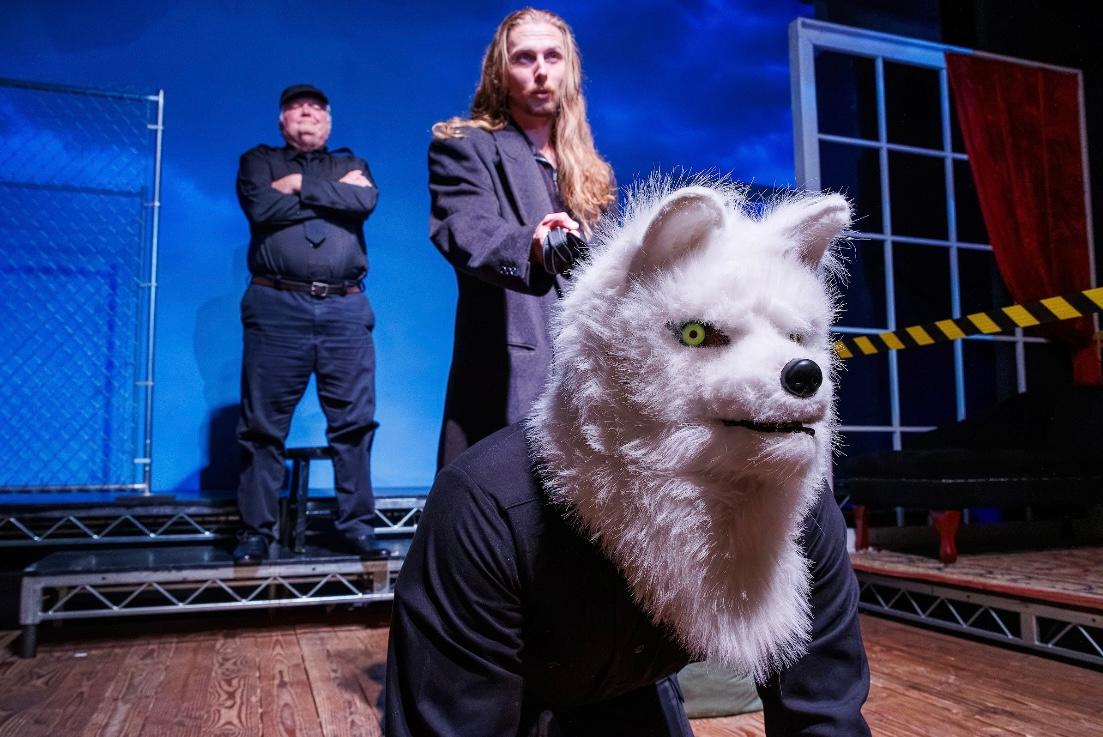
Photo by Paul Rubinstein
THROUGH SEPT. 27: City Garage, Bergamot Station Arts Center, 2525 Michigan Av., Santa Monica. 310.453.9939 or www.citygarage.org

Kimberly Akimbo
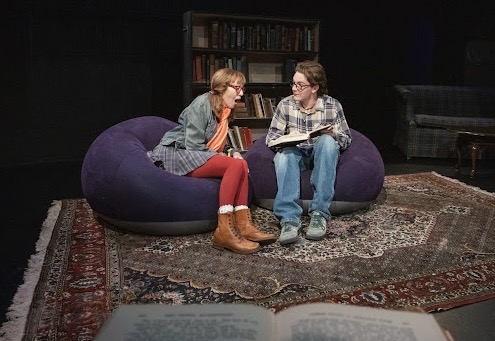
Photo by Nicola Buck
Theatre Palisades at the Odyssey Theatre
Talk about a phoenix rising from the ashes. After losing its cherished longtime venue to the devastating Palisades Fire in January, 2025, the 63-year-old Theatre Palisades has officially claimed a new “home away from home" at the Odyssey while their own Pierson Playhouse is in the planning stages of being rebuilt —and they’ve stormed this new stage with an absolute knockout of a production. It is a deeply heartwarming milestone for the scrappy little company and they could not have chosen a more perfect project to signal their triumphant return to storytelling.
As far as modern theatrical writing goes, David Lindsay-Abaire’s Kimberly Akimbo is practically bulletproof. Lindsay-Abaire easily stands as one of the very best and funniest playwrights creating in our times and this script is a masterclass in satire. He crafts a wild universe populated by delightfully exaggerated and highly eccentric characters that deftly spoof late-20th-century American suburbanite dysfunctional sensibility without ever abandoning their humanity. Above all, like the theatre itself, no matter how fucked up these peoples’ lives are, they are resilient. They return. They make things work.
At the center of this chaos is Kimberly, a 16-year-old high school student who is forced to navigate the normal awkwardness of adolescence while carrying an extraordinary burden: a rare progeria-like genetic disease that has aged her physical body prematurely at over four times the normal rate, transforming her into the appearance—and facing the physical challenges—of a 60-year-old woman. On the tragic brink of facing her own impending mortality long before her life has truly begun, Kimberly requires an actor who can hold grief and innocence in the exact same breath.
Dey Young delivers a magnificent performance in this exceptionally difficult and demanding title role. In costumer Michael Mullens’ period Britney Spears-inspired finery, Young handles the intricate emotional tightrope with extraordinary grace, effortlessly projecting the world-weary physical gravity and life experience of a senior citizen while keeping the earnest, wide-eyed, vulnerable spirit of a teenager brilliantly alive underneath. I never thought I’d see an actress as Kimberly who could compete in success with the ever-splendid Judy Jean Burns’ performance at the Victory in 2007, but Young delivers a deeply moving portrayal that perfectly serves as the anchor for the entire production.
Young is surrounded by an exceptional ensemble cast that delivers big comedic laughs at every turn. Abigail Stewart is especially memorable and a total scene-stealer, continuously bringing Lindsay-Abaire’s wonderfully off dialogue to life with worldclass comic timing as Kimberly’s outrageously self-centered super-neurotic mother. Stewart leans into the character’s boundless narcissism with total relish, making every hysterical line land with lethal precision.
Meanwhile, huge heaps of well-deserved praise must go to 17-year-old Zakary Risinger, who completely aces the role of Jeff, Kimberly’s nerdy anagram-and-Dungeons & Dragons-obsessed and hilariously awkward love interest. Risinger brings a sweet and utterly charming energy to the stage that sparks an immediate chemistry with Young, creating a tender emotional core that grounds the show's wilder comedic tangents.
Director Cate Caplin guides the entire enterprise with seamless and beautifully fluid staging, keeping the throttle down while carefully balancing Lindsay-Abaire’s tricky tonal shifts between laugh-out-loud absurd farce and quietly aching heartbreak. Enhancing this world in the most delightful way are Nick Santiago’s cartoonlike projections, which inject a whimsical, playful visual flair into the backdrop that perfectly mirrors the show's quirky aesthetic and eccentricity.
If there were a few minor hiccups on opening night, they were entirely typical for a maiden voyage in a new space. There was a bit of clumsiness in the mechanics of the scene changes, while some of the castmembers’ Glenda Morgan Brown-coached thick New Jersey accents initially started out a touch too thick. However, like the performances themselves, everything smoothed out beautifully as the audience reaction proved an encouragement and everyone and everything settled in for a confident, roaring groove by Act Two.
Ultimately, the most impressive feat achieved by Caplin and her gifted cast is how they accomplish what might be fairly impossible in less talented hands: taking a room full of extremely flawed, ridiculously bizarre, and clearly imperfect people and making them utterly lovable—and deeply, profoundly relatable. Theatre Palisades may be creating magic on a new stage for now, but their artistic heart and theatrical instinct remain unstoppable.
THROUGH AUG. 30: Odyssey Theatre, 2055 S. Sepulveda Blvd., WestLA. www.odysseytheatre.com
The Comedy of Errors
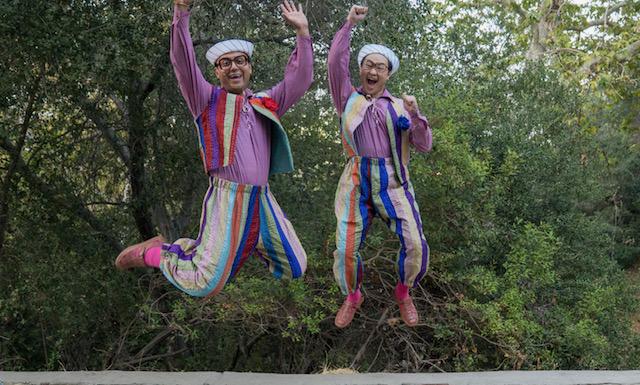
Photo by Grettel Cortes
Independent Shakespeare Company in Griffith Park
On the green purple yellow red grass
Let us pass through our perfect park
Pausing on a…
Sunday in the Park with Will!
After living a life in the theatre for well over 70 years and reviewing it for the last four decades, I’ll admit I have a tendency to shy away from Shakespeare—not because it isn’t the backbone of world drama, but because when you’ve seen the canon performed a few dozen times, I can practically mouth the actors’ lines right along with them. Then comes the Independent Shakespeare Company’s rip-roaring production of The Comedy of Errors at the Old Zoo Dell in Griffith Park and I can say without hesitation it’s one of the most enjoyable evenings I’ve had at the theatre in a long, long time.
Adapted and directed with irrepressible energy by Indie Shakes’ artistic director Melissa Chalsma (who also appears onstage as the Abbess opposite another uber-talented company stalwart, Lorenzo Gonzalez as Aegeon), this staging takes The Bard’s brisk farce of mistaken identities and transports it to a vibrant technicolor Grecian port city on the verge in the mid-20th century.
“With Comedy of Errors,” Chalsma comments, “Shakespeare has depicted an incredibly detailed depiction of an inter-connected community full of vibrant characters whose mistaken identity plot has delighted audiences for centuries. Our version has live music played by the actors. It’s perfect for our multi-talented company of performers and for the lively, informal atmosphere of the park.
“We’ll be transforming our stage and environs into the busy town square of an imagined Mediterranean island village in 1949. We’re setting the play on the day of the Festival of Saint Phanourios, a patron saint of lost things. The events of the play in and around the preparations for the festival and the audience will have a chance to celebrate with the characters. The production is a tribute to community and the history that ties us together.”
And truly, this fresh new take on ol' Will’s most raucous, pun-centric comedy accomplishes that task bigtime. Chalsma and her creative cohorts, especially costumer Danica Martini and lighting designer Bosco Flanagan, join together with a remarkably enthusiastic cast to make the familiar text feel completely original, delightfully fresh, and relentlessly hilarious.
Indie Shakes’ annual summer residency in our beloved Griffith Park remains one of the finest gifts to Los Angeles arts culture, completely free to local residents yet performed by a gifted and hard-working cast of full Actors’ Equity union members being paid a proper salary—and what a refreshingly novel idea that is!
ISC co-founder and managing Director David Melville, who also pulls triple duty onstage as Dr. Pinch as well as wailing away quite significantly on the guitar on COE’s musical side stage, has infused the production with his own original Tom Lehrer-esque score featuring wonderfully silly, topical, tongue-in-cheek lyrics. Fronting Melville’s live onstage band led by musical director Dave Beukers on keyboards is the extraordinary Kalean Ung, who acts as the show’s narrator and nightclub singer, reimagining Shakespeare’s Courtesan as a sultry chanteuse at the Porpentine Club. Ung’s stunning vocal range effortlessly bridges opera, pop, and jazz, steering the show's musical high points perfectly.
Still, the core engine of the production rests on the sensational demanding farcical antics of the two lead actors, Brent Charles and Patrick Batiste, who together rocked a far different though equally impressive acting challenge in the title role and as his nemesis Tullus Aufidius, respectfully, in Coriolanus, ISC’s first summer show this season. And as their second-banana sidekicks playing the twins’ bumbling (also twin) manservants, Brian Tran and Trinidad James Sandoval add pure comic gold to the proceedings. Together, channeling the virtuosic high-octane slapstick of Cirque du Soleil clowns, these four performers infuse the stage with a tremendous surge of energy, excitement, and sheer corporeal buffoonery that keeps the burlesque of Chalsma’s vision operating at peak velocity.
Bright, inventive, and wonderfully physical, the production plays like a seamless blend of classic slapstick, 1950s musical comedy, and lively cabaret. It takes a truly inspired team to make a 400-year-old warhorse feel like a brand-new party, so if you think you’ve seen The Comedy of Errors too many times to be surprised, head to the gloriously versatile Griffith Park one of these cool summer evenings and let this brilliant company prove you delightfully wrong.
THROUGH SEPT. 6: Indie Shakes, outdoors in the Old Zoo area of Griffith Park, Los Angeles. www.indieshakes.org
Dracula: The Musical
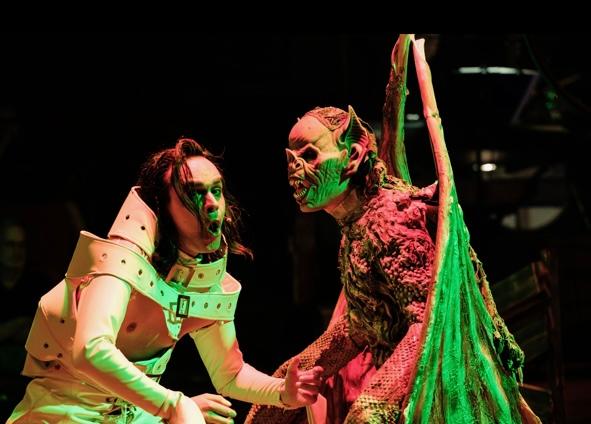
Photo courtesy of Meyer2Meyer Entertainment
Nocturne Theatre
Ah! The children of the night! What music they make! And what a special treat the unstoppably daring and slightly off-kilter visionaries rapidly putting Glendale’s re-envisioned Nocturne Theatre on the LA theatrical map have decided to bring their delightfully edgy and boldly sexy production of the seldom produced Dracula: The Musical back home to their stage for a limited run after its sold-out debut last season.
I have loved the spooky and mysterious allure of the classic 1931 film version of Bram Stoker’s 1897 masterpiece ever since first compulsively tuning into the brand-setting late Saturday night old horror movie-airing, Marvin the Near-sighted Madman-hosted series Shock Theatre whenever I was back home in Chicago as kid—a time when my best buddy Randy and I made the revelation together of how seductive vampiresses and exotically-accented undead Eastern European counts could turn film into a conduit for… er… mutual personal discovery.
My relationship with the dashing nighttime bedside bloodsucker has been a lifelong affair ever since. The original John L. Balderston and Hamilton Deane 1927 stage version on which the Bela Lugosi-Tod Browning film was based became one of the first productions I brought to my ambitious dinner theatre enterprise in the Lake Arrowhead Hilton near our weekend home in the early 80s, complete with an Edward Gorey designed set, gallons and gallons of stage blood, a dripping butcher-fresh cow’s heart ripped out of the count’s chest each night during the finale, and me in the director’s chair as well as chewing up the scenery (and my share of gummy spiders and flies) in the role of the Master's infamous deliciously deranged sidekick Renfield.
Over the decades, I’ve inhabited this story from the inside out, culminating with my returning a quarter-century later in 2009 and well into 2010 to take on the equally juicy and stylistically over-the-top role of Dr. Van Helsing in Ted Monte and Terry Duddy’s adaptation The House of Besarab, mounted in an environmental staging that took audiences following our cast from richly vintage-appointed room to room throughout the massive and historic American Legion Post 43 on Highland Avenue in Hollywood—the 1929 art deco Egyptian Revival landmark made famous by its legendary equally immersive nine-year run of Tamara. What was slated for a four-week run stretched into several months for us, reinforcing just how deeply this notorious and familiarly gloomy vampire narrative grips an audience when brought up close.
Some people prefer their musical theatre bright and sunny and filled with corn as high as an elephant’s eye and nuns worrying about the problem of Maria but personally, give me the strange, the seductive, and sinister and dangerous every time. Seeing Frank Wildhorn, Don Black, and Christopher Hampton’s Dracula: The Musical performed in the Nocturne’s imaginative and incredibly rare intimate in-the-round staging reminded me why this notorious tale never loses its—if you’ll excuse the expression—bite.
Beginning at La Jolla Playhouse in 2001 before heading to Broadway in 2004, this too-often overlooked Phantom of the Opera-emboldened incarnation of the Dracula legend is far more soaring operetta than traditional musical comedy. As such, Wildhorn’s lush, sweepingly dramatic score requires legit vocal power across the board and where Justin and Melissa Meyer, the enterprising couple who turned the long-shuttered former Glendale Center Theatre into this venue, find so many insanely gifted non-Equity performers is something of a minor miracle.
Under the seamlessly flowing direction of Justin Meyer himself, who also impressively assays the demanding title role, the entire ensemble delivers vocals that practically blast their audience right out onto Orange Street. Meyer commands the stage as Dracula, matching vocal stamina with an arrestingly brooding presence. Opposite him, Samantha Rose as the Count’s romantic obsession Mina Murray also delivers a standout vocal performance, with her Act II ballads “The Heart is Slow to Learn” and “If I Could Fly,” as well as her haunting follow-up duet with Meyer, “Mina’s Seduction / There’s Always a Tomorrow,” anchoring the emotional core of the second act.
AJ Castro as poor Jonathan Harker is also possessed of some purdy impressive pipes and is especially good when working alongside Christian Lees, Tyler Angier, and Truman Bjarke as the trio of suitors panting after Mina’s doomed friend Lucy (Kelly Krippendorf), together forming a dynamic vocal unit functioning as a sort of darkly Gothic barbershop quartet that rocks the theatre with tight harmonies and vocal firepower. J.D. Wallis makes the quintessential Van Helsing and whomever managed to come up with a crucifix that sets itself on fire in his hands when first confronting his arch-nemesis must also be commended.
Andrew Diego, who appeared to have his own personal fan club cheering him on opening night, gives a wonderfully unhinged performance as the asylum-bound Renfield, capturing both the manic complexity and the usually underplayed tragic nature of the character. Adding to the atmospheric terror, singer Abhaya Krishman-Jha and aerialists Lisa-Marie Burnside, Rachel Fictum, Kimberly Butler as the Count’s sensual and titillatingly underdressed Vamps, innovatively contribute overhead wire and silk work that bring a jaw-dropping extra layer of visual chills to the staging.
Melissa Meyer’s choreography, along with the aerial moves designed by Burnside, smoothly handle the spatial demands of staging in-the-round with an uncanny precision, while musical director Chris Wade brings out the full weight of Wildhorn’s crashingly brilliant score. Sound engineers Matt Merline and Julia Vollstedt master the difficult acoustic environment of the all-enveloping four-sided theatre experience where sightlines and sound balance can easily betray a production, complimenting Meyer’s staging with total fluidity.
Once again, Tanya Cyr’s worldclass costume design, such an integral component of the tremendous success of the company’s splashy The Little Mermaid this Spring, is both visually stunning and tremendously creepy, marking yet another triumph for the Nocturne’s wardrobe department. Her designs especially excel in tracking Dracula’s various stages of physical transformation, giving his evolving visage a menacing visceral impact. Meyer’s lighting plot, which must share cues with the theatre’s production of The Full Monty, also now in performance in the same space, is surely testament to this guy’s many gifts.
Speaking of that, I love that this boldly erotic vision of Dracula: The Musical is being performed in rep right now with the equally adult-oriented The Full Monty; whichever kind of human anatomy you prefer to witness—or perhaps both?—the Nocturne is a great destination and perfectly over-cooled to beat our current heatwave. Nobody in this town is accomplishing this musical theatre-meets-Paris’ Crazy Horse hybrid quite as successfully as Justin and Melissa Meyer this long hot summer and their ambitious Quixote-like mission to transform this landmark Glendale space into a powerhouse venue for Los Angeles theatre is nothing short of astounding.
THROUGH AUG. 23: Nocturne Theatre, 324 N. Orange St., Glendale. thenocturnetheatre.com
Grangeville
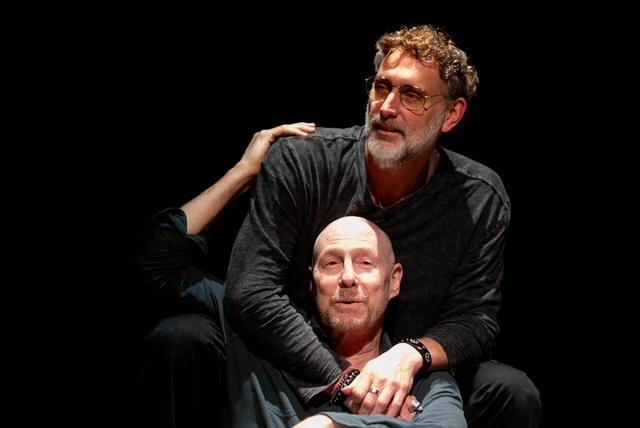
Photo by Jeff Lorch
Ruskin Group Theatre
MacArthur “Genius” Fellow Samuel D. Hunter is quickly becoming this generation’s master cartographer of the marginalized, mapping the quiet, often devastating landscapes of rural isolation and emotional stagnation. His latest work, Grangeville, which is receiving a suitably fine Los Angeles debut from the Ruskin Group, strips away the clutter of most playwright wannabes to deliver what is indisputably the best play of the year in our often rather dry cultural oasis—and it's simply a towering achievement in pure ensemble performance.
The narrative spine of the play follows Jerry and Arnie (Jeff LeBeau and Tim Cummings), two half-brothers who haven’t spoken in years currently living continents apart suddenly forced to confront the toxic legacy of their upbringing. With the abusive mother who raised them now on her deathbed, the impending loss forces a painful reckoning with the ghosts of their past, albeit mostly by telephone and zoom across the miles from Jerry’s rural lifelong home in Grangeville, Idaho, and Amsterdam, where Arnie fled many decades before from persecution from his brother and his hometown’s rampant homophobia.
The two exceptional actors are each tasked with tackling dual roles to flesh out this delicate familial orbit and, in lesser hands, such a casting conceit could feel like a technical exercise or a showcase for virtuosity at the expense of substance. Here, however, LeBeau and Cummings become the ultimate posterchildren for what ensemble acting is truly about. The chemistry between them is so tightly knit, their rhythms so instinctively locked, that they evoke a sprawling world of shared history and unspoken resentment with nothing more than a shift in posture or a heavy silence. The result is two of the finest performances witnessed on a local stage this season.
I have personally grown deeply exhausted by the wave of modern “kitchen sink” drama that mistakes lecturing for playwriting. Too often theatre has evolved in the woke era to become a relentless exercise in being preached to, forcing audiences to sit through hours of characters aggressively whining about the unfair injustices of their lot in life as if we are personally responsible. Hunter addresses these identical heavy themes of personal and societal trauma without hitting us over the head with a thematic hammer. Instead of weaponizing grievance to make his audience feel inherently guilty or to take on the blame for the many unequal transgressions for which our society has certainly been responsible, Grangeville beautifully allows its characters to emerge as real flawed human beings who by the end of the play are actively on their way to healing themselves.
At its core, the play serves as a profound interrogation of the victim card and the quiet tragedy of wasted potential—and Hunter captures how easily human beings can let their lives slip away while marinating in past traumas and using those old still-festering wounds as an armor against moving forward.
This ideological current crests magnificently in a breathtaking monologue delivered by Cummings as Jerry’s estranged wife Stacy. In an unforgettable moment of clarity, the character cuts through the emotional stagnation to lay bare the fallacy of competitive suffering. She speaks of the insidious trap of spending our lives waiting for a reward for our pain, a cosmic acknowledgment or a validation from those who hurt us, clearly meant to remind us all that there is absolutely no guarantee that compensation will ever arrive. To spend a lifetime waiting for such reparation, she argues, is the ultimate waste of the precious time we’re given. It is a stunning, paradigm-shifting piece of writing, delivered with such a raw intensity by Cummings that stops the heart.
John Perrin Flynn’s direction throughout is strikingly austere and entirely flawless, allowing the actors and Hunter’s bruising dialogue to remain front and center. That minimalism makes the play’s incredible eleventh-hour shock attack of a set change all the more jarring.
It is on this specific design choice that I must step out from behind the traditional critic’s notebook. When the stage suddenly transforms into a section of the guys’ decrepit trailer where they grew up to clean out their mother's meager belongings, my immediate visceral reaction was that the new environment felt cartoonlike and exaggerated, too overly theatrical for such an intimate character piece.
But then, great theatre often doesn't end when the house lights come up and the true measure of a production's success is how it echoes when the memory and impact of it is absorbed back into the real world. On the drive home, my partner, who was born in similar disadvantage in a New Mexico Navajo reservation before his unstoppably ambitious father successfully pulled them out of it, began talking about his traumatic early upbringing, detailing similar realities of growing up in his own basically impoverished rural community.
I had heard these haunted stories from Hugh before, of course, but it wasn't until Hunter's uncompromising visual was burned into my mind's eye that the true weight of those memories finally clicked. The stark and uncompromisingly difficult reality of designer Stephanie Kerley Schwartz’s stage environment expertly bridged the gap between abstract storytelling and lived truth. It forced a wave of personal humility in me, having been raised in such contrasting comfort and safety and privilege, making me instantly realize how easily we can misunderstand the depth of others' hardships from a distance and how painfully claustrophobic some realities can be.
What is better than art that truly opens eyes and heals, especially without being excruciatingly obvious? Grangeville is theatre at its most vital: intimate, perfectly executed by Flynn and his creative team, and emotionally devastating. It doesn't just ask for your attention; it demands your empathy.
EXTENDED THROUGH SEPT. 21: Ruskin Group Theatre, 2800 Airport Av., Santa Monica. 310.397.3244 or www.ruskingrouptheatre.com
Tunnel of Love
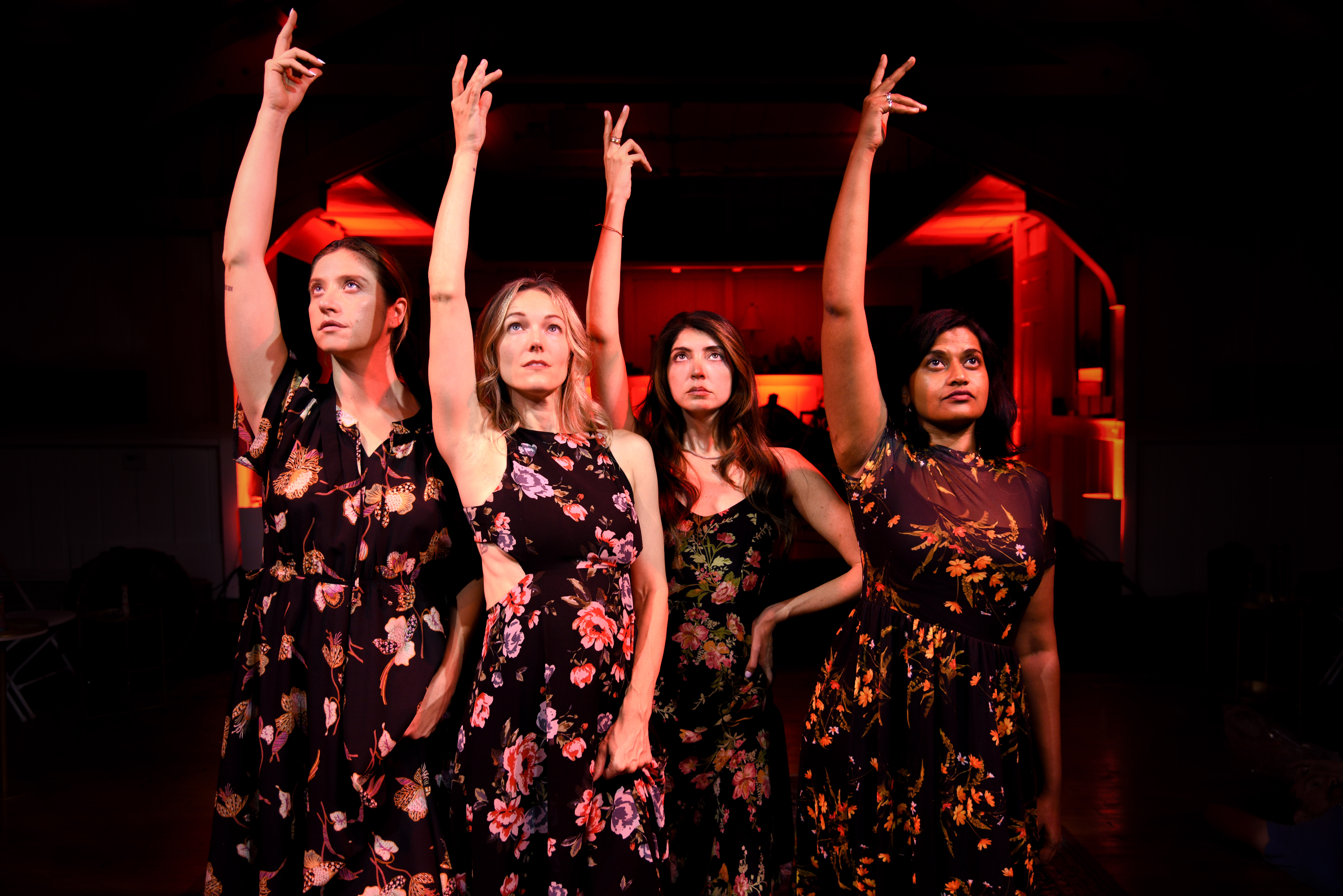
Photo by Elena Seyfarth
Blue Pen Theatre Company
What a joy it is to see Charles Mee’s work back on Los Angeles stages this season after an entirely too long absence. First came City Garage’s magical production of Limonade Tous Les Jours and now the ambitious, discerning fledgling Blue Pen Theatre Company is presenting the LA premiere of Mee’s Tunnel of Love. Adding to the occasion is the setting: the site-specific Majic Factory, housed inside the historic 1908 Echo Park Clubhouse and Library—the very first location ever maintained by the Los Angeles Recreation and Parks Department.
The play itself, dubbed a “kaleidoscope of love stories” in classic Mee fashion, eschews conventional linear narrative to assemble a collage of human connection: wild, messy, sublime, and sometimes painful. Characters collide, confess, dance, and debate, offering a vibrant tapestry of romance in both its most vulnerable and most chaotic permutations.
Back in 2004, I had the privilege of playing Frank in the LA premiere of Mee’s Summertime—the second production to inaugurate the then-new Boston Court Performing Arts Center, brilliantly directed by Michael Michetti and featuring an early glimpse of the extraordinary Tessa Thompson playing my daughter.
It was an absolute flashback for me that early in Tunnel of Love, Nika Burnett as the romancaphobic Ziya launched into the monologue about how each of us has only one true love in life. It was the exact same monologue I delivered to open Act Two of our production 22 years ago.
That cross-pollination of text speaks directly to Mee’s generously open-sourcing theatrical philosophy. He famously encourages artists to dismantle, reassemble, and freely interpret his texts. That same artistic freedom explains why Nalini Sharma here delivers a blistering monologue railing against men—complete with a string of penis jokes—that was originally delivered in our Summertime production by the incomparable Sandy Martin (the grandmother in Napoleon Dynamite and Sam Rockwell’s mother in Three Billboards Outside Ebbing, Missouri).
Blue Pen deserves real praise for their sheer bravado and a nothing-stops-us quest to bring such incredible and frequently overlooked works to our scrappy local theatre community, this second outing following their maiden production last season of Aaron Posner’s Stupid Fucking Bird—coincidentally another play I had the honor of doing in its LA debut, also under Michetti’s guidance at the Boston Court.
What stands out most here is the pure ambition and resourcefulness of this young cast. Burnett, Sharma, Solomon Astley, Amanda Perez, Joel Allen, Jodi Moore Lewis, Alessandro Marino, and Nick Samson operate as a remarkably cohesive, gamely onboard ensemble, with Burnett and Lewis offering especially grounded and compelling stand-out work throughout the evening.
Adding to the production's ingenuity is the inventive addition of live music, with bandleader Brett Rojas on drums, Lein Escudero on keyboards, and Matthew Perez on bass and guitar providing a dynamic soundtrack backed by Burnett delivering some impressive vocal stylings.
Director Mark Sitka handles the difficult playing space with tremendously fluid, engaging staging, well-complemented by Chrissy Harding’s energetic choreography. The performances are effective overall, showcasing a rare passion for tackling difficult, unsanitized material on a lean budget. My only operational critique concerns the acoustic environment: in a two-sided audience configuration and considering the venue’s high vaulted ceiling, when actors turn away from one section, Mee’s not-to-be-missed dialogue too often gets lost. The addition of subtle body mics would easily solve the issue and keep every word intact.
Ultimately, Blue Pen’s production honors the foundational ethos of Chuck Mee’s worldview. Back in 2004, when I interviewed the playwright for Entertainment Today, he attributed the decline of American theatre to the "triumph of naturalism and the well-made play, which is boring people crazy out of their minds." Instead, Mee championed a return to the "immense energies" of the Greek classics and Shakespeare, a theatre that encompasses spectacle, music, dance, color, and noise alongside text.
As Mee explained from his home in New York at the time, "So much of our theatre and movies make us stupid and ill-prepared to live our lives because they seduce us into believing that human destiny is worked out only in the intimacy of one-on-one relationships. I like plays that are not too neat, too finished, too presentable. My plays are broken, jagged, filled with sharp edges, filled with things that take sudden turns. They careen into each other, smash up, veer off in sickening turns. That feels good to me. It feels like my life. And then I like to put this chaotic stuff into a classical form.
"Things invade each other all the time, so if you collage material and let farce live side-by-side with horror, plays can turn on a dime the way real life does. I've come to believe that art is most pleasurable not when it closes us down, narrows our perceptions and sympathies, draws boundaries of appropriateness or goodness, but when it opens us up."
That commitment to juxtaposition—high and low, tragic and farcical, intellectual and physical—demands a rare kind of courage from performers. When Michael Michetti directed us in Summertime, he gave us all a piece of advice that remains the ultimate barometer for any company tackling Mee’s canon: "Be brave, commit to the language, the physicality, the passion, the jagged journey, and find the place where that reality meets your heart. I think that’s where Chuck’s plays live."
In the historic yet raw space of a former Echo Park Craftsman clubhouse, Blue Pen’s spirited cast accepted that very invitation. They brought bravery, resourcefulness, and undeniable heart to Mee’s jagged and beautiful world—and Los Angeles theatre is all the richer for their commitment.
THROUGH AUG. 23: Blue Pen Theatre at the Majic Factory, 1004 Echo Park Av., LA. www.bluepentheatre.com
F**king Strangers
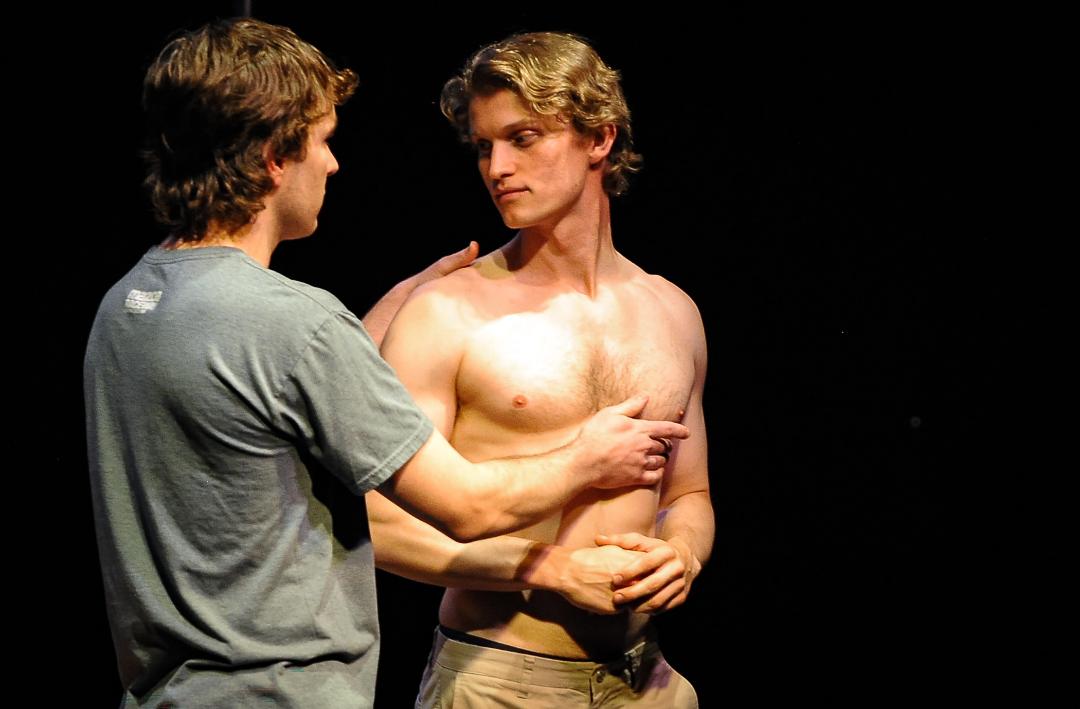
Photo by Cooper Bates
Echo Theater Company at Atwater Village Theatre
There an undeniably electrifying magic that happens when a brilliant and courageous playwright, a veteran director gifted with uncanny surgical precision, and a seamless ensemble of actors align. Echo’s stunning world premiere of Erik Patterson’s F**king Strangers delivers just that: a penetrating and deeply contemporary exploration into the intertwined nature of connection, deception, and our species’ universal craving to be seen and loved.
Patterson, whose formidable body of work (Handjob, One of the Nice Ones) has long established him as one of Los Angeles’ most vital theatrical voices, has penned a piece that’s as hilarious as it is piercing and often uncomfortable. Under the spot-on clockwork leadership of director Chris Fields, founder and artistic director of the Echo, the production navigates a breakneck series of quick cinematic scene transitions with such fluid grace that the rhythm never falters, a rare feat in plays structured with such rapid shifts that the momentum often gets lost in the dark.
At the heart of the production is what easily stands as one of the most cohesive ensemble casts of the year. Echo audiences will immediately recognize three of the four actors from the theatre’s memorable production of Samuel D. Hunter’s Clarkston, also directed by Fields two seasons back, a presentation that garnered my annual TicketHolder Awards for Best Production, Best Actor in a Play for Michael Sturgis, Best Supporting Actress for Tasha Ames, and my New Discovery 2024 Award for then LA theatre newcomer Sean Luc Rogers.
These remarkable performers’ well-honed artistic shorthand with one another is quite palpable here, perhaps making it a tad intimidating for Strangers’ additional castmember James Tupper—or then again, perhaps not. I would have loved to have been a fly on the wall during rehearsals to see the process unfold.
Rogers captures the volatile, seeking energy of Patterson’s Teorema-esque pivotal role, a smoldering and successful callboy with a soul and a troubled past, mining a unique sincerity when delivering lines with an effortless magnetic charisma—including a quite endearing self-assessment for Dylan’s choice of profession: “I’m a sexual kaleidoscope... I like to help people.”
Sturgis turns in a staggering performance, finding a delicate though intensely complicated vulnerability as the agoraphobic Ru—and he appears to lay it bare with an incredible and, I’m sure, deceptive ease. What’s most remarkable is how subtly he masks his character's true motives for seeking out and befriending Dylan online in the first place. It’s a secret kept hidden from the audience in real time but in retrospect every layer, every choice, every flicker of intent is right there on display all along and Sturgis delivers a masterclass in quiet calculation and emotional complexity.
Ames once again proves her remarkable range, bringing depth, a worldclass comic timing, and a grounded humanity to every moment she inhabits, while Tupper offers an initially world-weary presence as a conflicted father with a complicated secret extracurricular sex life who becomes caught in the center of the play’s heightening storm. The lessons Mick learns along the way about how to calm his guilt and trust his feelings unfortunately eventually proves to be a condition that, in the last analysis, proves devastating.
At its core, F**king Strangers grapples with the quiet desperation of modern life and our attempt to be brave enough to tackle the desire to step out from behind our carefully curated facades and simply be recognized. As Patterson reminds us, "Fiction is the lie that tells the truth," and this sensational wordsmith uses his fiction to hold up a strikingly accurate mirror to humanity's collective loneliness.
If there is any reservation in an otherwise flawless evening of theatre at its most riveting, it lies in the play’s final moments. Without spoiling the narrative turns, Mick makes a decision at the climax that personally to me felt unsatisfactory and painfully misguided. I yearned to see the character break free toward happiness and building a fresh chapter with someone truly worthy of him, stepping away from the self-centered figures in his life who should be making the effort to find themselves rather than demanding that sacrifice from him.
Perhaps that lingering ache is a testament to how deeply we come to care for these characters over the course of 90 minutes. Here's hoping Patterson might consider in the future writing a F**king Strangers: Part Two, if only to give Mick a second chance and the bighearted Dylan the resolution he deserves.
THROUGH AUG. 24: Echo Theater Company, Atwater Village Theatre, 3269 Casitas Av., LA. (747) 350-8066 or EchoTheaterCompany.com
Unassisted Residency
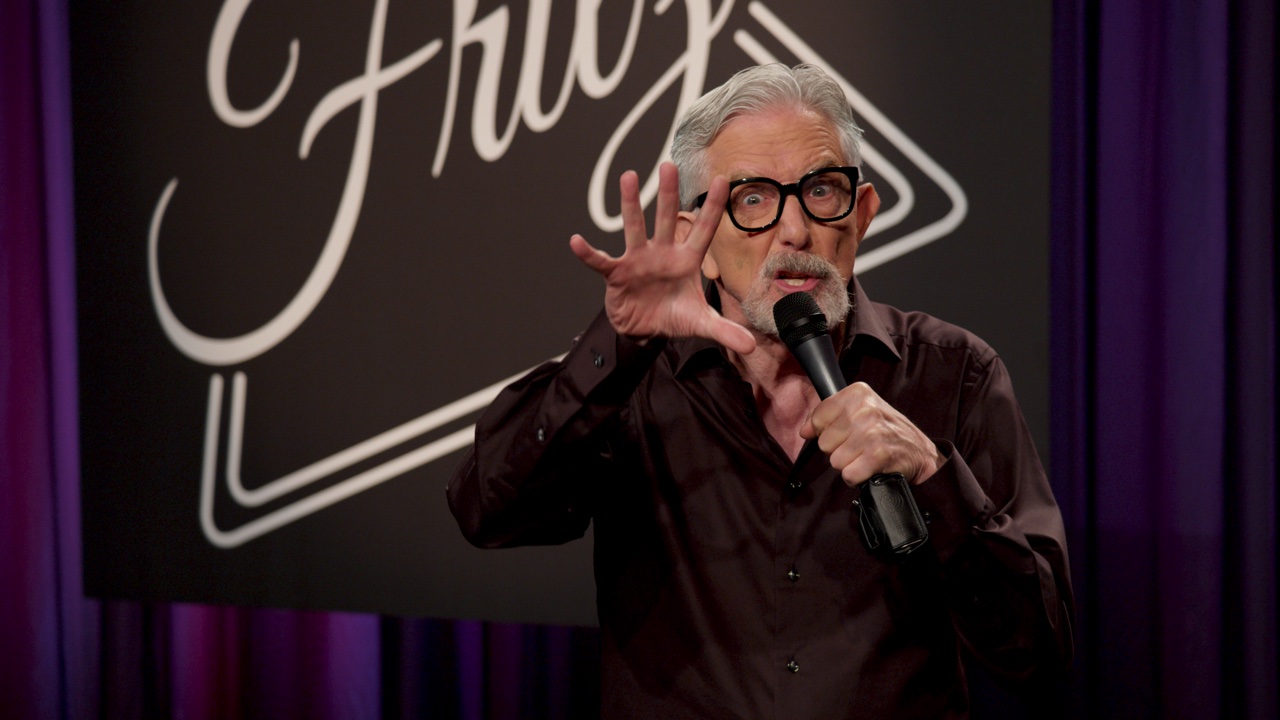
El Portal Theatre
Longtime Los Angeles weatherman Fritz Coleman retired in 2020 after four decades delivering his signature uncannily cheery forecasts on a daily basis but at age 76, his solo show Unassisted Residency, which plays once monthly at the El Portal’s intimate Monroe Forum, proves he’s still got the chops to deliver a jocular and lighthearted tsunami to his eager and most loyal fans.
Coleman began his career coming to LA to pursue his passion for standup comedy in the early 80s after first achieving success as a well-loved deejay radio personality in Buffalo, New York.
As the story goes, a producer at NBC caught his act one night at a local club and began to woo him to become a weatherman at KNBC-TV since our weather here was so consistent that he felt it needed a little on-air boost of humor to make it more interesting.
Delivering the daily forecast with a twinkle in his eye beginning in 1984 didn’t stop Coleman from continuing to chase his original dream by performing on local stages in several successful live shows, including his hilarious award-winning turn in The Reception: It’s Me, Dad! which played around town for several years to sold out houses.
Now, after leaving NBC four years ago, Coleman is back but the demographics have changed—or I might politely say… matured.
In my own case, as someone a year older than Coleman, his focus on finding the humor in aging is most welcome. In Unassisted Residency, the comedian talks about the challenges life has to offer in these, our so-called golden years, from physical deterioration to losing contemporaries on a regular basis to navigating the brave new world of technology and social media.
As his opening warmup act, the very funny and professionally self-deprecating Wendy Liebman notes, while looking out at the sea of gray hair and Hawaiian camp shirts in their audience, that Coleman chose to present his show as Sunday matinees so his target audience can shuffle our drooping derrières on home before dark.
Along the way, he also tackles subjects such as retirement communities, nonstop doctors’ appointments, incontinence, and Viagra, not to mention having grown up sucking in our parents’ omnipresent clouds of secondhand tobacco smoke and that generation’s lackadaisical attitude toward our safety and our health, all before moving on discuss to his all-new admiration for those heroic modern educators who during the pandemic had the patience to deal with zoom-teaching his grandkids.
The one thing he doesn’t talk much about is the weather—that is beyond mentioning how grateful he is that our current heat wave didn’t deter those gathered from venturing out of our caves and offering as a throwaway that one of the reasons he retired four years ago was climate change. Although he never says it, he doesn’t really have to; we get that even for someone as funny as Coleman, everyone has their limits when it comes to the potentially catastrophic future for our poor misused and abused planet.
Then when he launches into reminiscing about the amazingly incessant search for sexual gratification in our younger years (that time Stephen King once wrote when the males of the species all look at life through a spermy haze) and how that has changed since then. As a now single guy still looking for love—with some choice remarks about online dating sites—he tells a rather steamy tale about one date that proves it ain’t over ‘til it’s over, something of which I can definitely relate.
I first met Coleman in 1988 or 1989 when I did a feature interview with him as a cover story for The Tolucan (the more industry-oriented and less Evening Women’s Club-ish-pandering predecessor of the Tolucan Times).
He was gracious and charming and kept me laughing so hard back then that I couldn’t take notes fast enough, a knack he not only hasn’t lost but has sharpened considerably over the past 40 years. I couldn’t help wondering how many of the audience members at the Forum have been following him since then and for whom the topic of not-so gently aging hits home as dead-center as it did me.
This doesn’t mean you have to be 70-something to appreciate Fritz Coleman’s hilarious gift for creating homespun storytelling in his ever-extending monthly outing called Unassisted Residency.
My partner Hugh, who is a mere 42 years my junior and was quite literally at least three decades younger than anyone else in the audience last Sunday, laughed longer and louder than anyone else in the audience—perhaps a reaction to hearing me bitch continuously about getting old for the last 12 years?
NOW IN ITS THIRD YEAR! Plays one Sunday each month at the El Portal Theatre’s Monroe Forum Theatre, 5269 Lankershim Blvd., NoHo. For schedule: www.elportaltheatre.com/fritzcoleman.html
See? I'm an Angel!